
Cache-Design Guide: 5 kreative Cache-Design-ideen
Du kennst das: Du folgst den GPS-koordinaten, stehst vor einem grauen magnetischen Mini-behälter unter einer leitplanke und denkst dir nichts weiter dabei. Fund gemacht, weiter. Das ist kein schlechtes geocaching, aber es ist auch kein besonders gutes. Die wirklich unvergesslichen caches sind die, bei denen du zweimal hinschaust, schmunzelst oder echte begeisterung spürst. Mit dem passenden Design kannst du genau dieses erlebnis für andere schaffen. In diesem guide zeigen wir dir, wie du schritt für schritt kreative, langlebige und faire cache-verstecke baust, ob in der Stadt oder mitten im gelände.
Inhaltsverzeichnis
- grundlagen für erfolgreiches Cache-Design
- Cache-Design in urbanen umgebungen: herausforderungen und lösungen
- effektives Cache-Design im gelände: naturgetreue verstecke und okologische verantwortung
- innovative DIY-ideen: technik, 3D-druck & gadget-caches für fortgeschrittene
- wartung, kontrolle und langfristige freude am Cache
- unsere erfahrung: was wirklich zählt beim Cache-Design
- dein nächstes geocaching-abenteuer: mit CacheWerk zum perfekten Cache
- häufig gestellte fragen zum Cache-Design
Wichtige Erkenntnisse
| Punkt | Details |
|---|---|
| Kreativität ist Trumpf | Originelle, clevere Verstecke sorgen für mehr Freude und Herausforderung beim Geocaching. |
| Standortgerecht planen | Die passende Tarnung und Materialwahl richtet sich nach urbanem oder natürlichem Umfeld. |
| Langlebigkeit & Wartung | Regelmäßige Kontrolle verlängert die Lebensdauer und sichert den Spielfluss für alle Geocacher. |
| Technik clever nutzen | Moderne 3D-Drucke und Gadget-Caches bringen Innovation und neue Spielmechaniken ins Geocaching. |
grundlagen für erfolgreiches Cache-Design
Ein gutes Cache-Design erfüllt drei grundlegende anforderungen: es ist herausfordernd, zugänglich und sicher. Das klingt einfach, aber viele Cache-Owner unterschätzen genau diesen dreiklang. Ein versteck, das niemand findet, weil die koordinaten um 20 meter daneben liegen, frustriert die community. Ein cache, der nur mit kletterausrüstung erreichbar ist, schließt viele geocacher aus.
Bevor du anfängst, solltest du dir folgende fragen stellen:
- wo soll der cache liegen? Stadt, waldweg, park oder abgelegenes gelände?
- welche schwierigkeit ist gewünscht? D/T-wertung ehrlich festlegen.
- wie wartungsintensiv darf der cache sein? Je komplexer, desto mehr pflege braucht er.
- welche materialien überstehen das lokale wetter? regen, frost und hitze stellen unterschiedliche anforderungen.
Ein typischer fehler ist, zu viel in ein versteck zu packen. Ein cache, der gleichzeitig rätsel, gadget und nano-dose sein will, wird schnell unübersichtlich. weniger ist oft mehr. konzentriere dich auf eine starke idee und setze sie konsequent um.
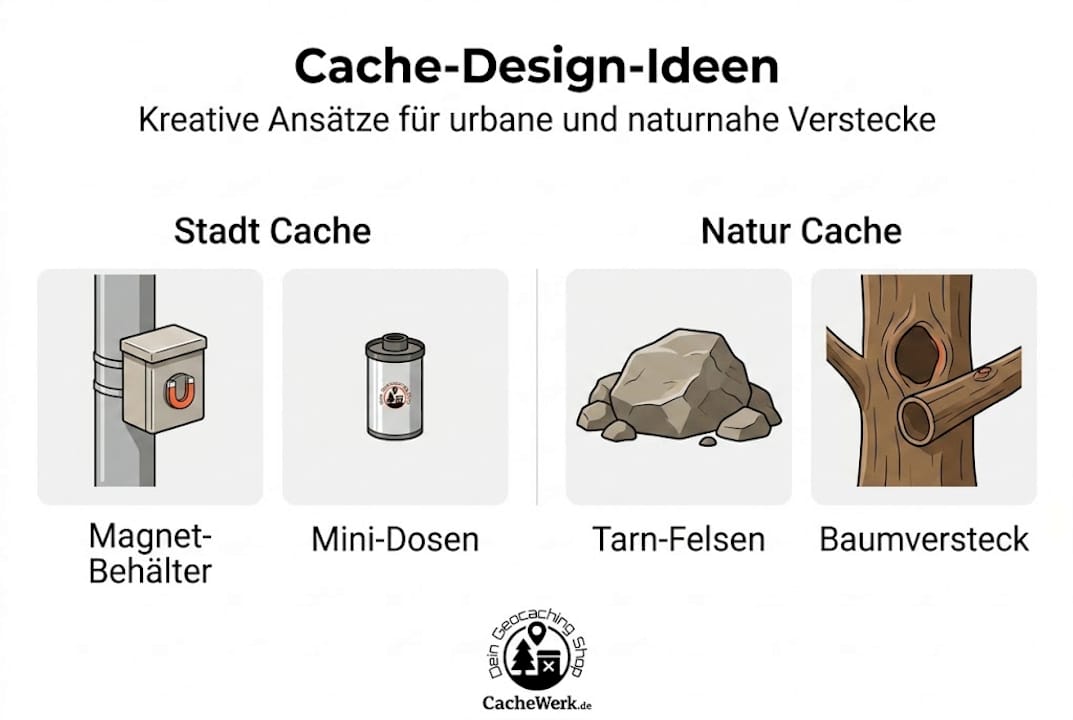
Die anforderungen unterscheiden sich je nach umgebung stark. ideen für urbane verstecke zeigen, wie vielfältig die möglichkeiten in der Stadt sind. Im gelände hingegen zählen naturmaterialien und unauffälligkeit.
| Cache-typ | Material | besonderheit | wartungsaufwand | umgebung\ |
|---|---|---|---|---|
| nano-cache | metall, magnet | sehr klein, kaum sichtbar | gering | urban\ |
| petg-dose | 3D-druck (petg) | robust, individuell formbar | mittel | beides\ |
| fake-fels | kunstharz | täuschend naturgetreu | gering | gelände\ |
| ammo-box | metall | wetterfest, großes logbuch | gering | gelände\ |
| gadget-cache | elektronik, kunststoff | rätselcharakter, hightech | hoch | beides |
magnetische behälter und nano-verstecke auf metallflächen sind in urbanen umgebungen besonders beliebt, während im gelände fake-steine und pvc-rohre die nase vorn haben.
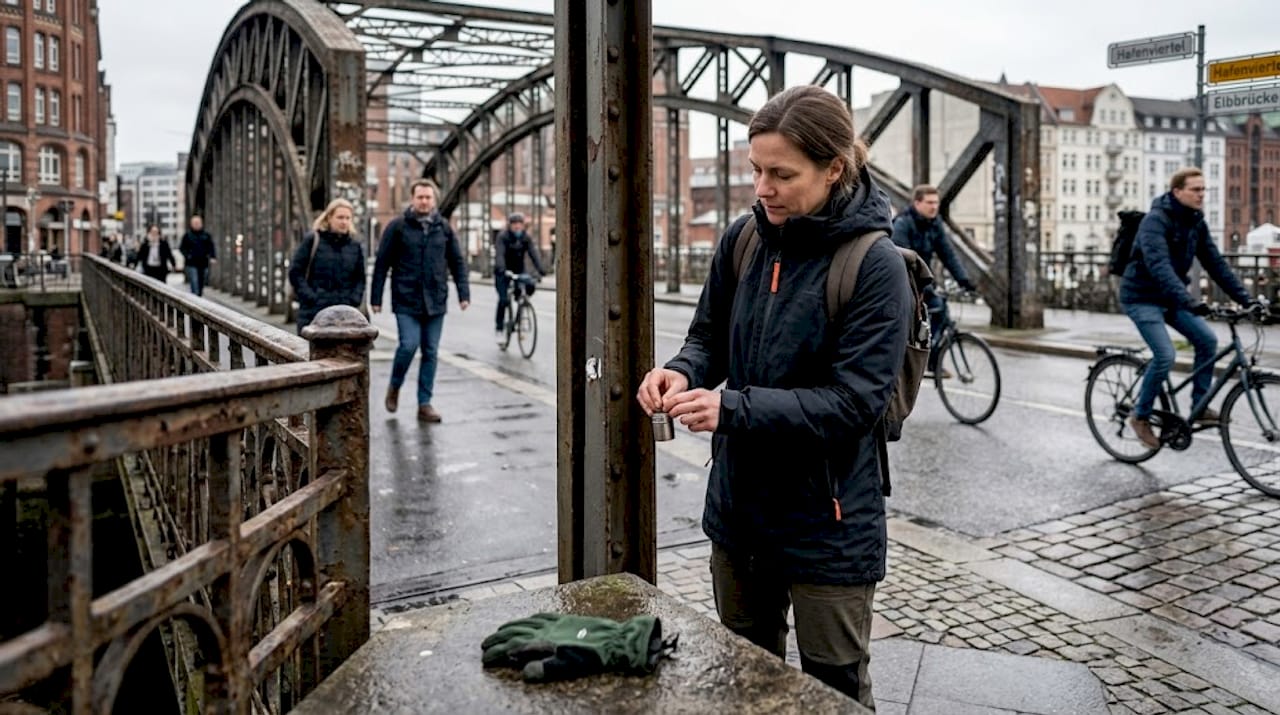
Profi-tipp: teste deinen cache vor der veröffentlichung mit einem freund, der ihn noch nicht kennt. So erkennst du, ob koordinaten, hinweise und schwierigkeit wirklich passen.
Cache-Design in urbanen umgebungen: herausforderungen und lösungen
Städte bieten faszinierende möglichkeiten für kreative verstecke, aber auch besondere herausforderungen. muggels (nicht-geocacher) sind überall. das bedeutet: tarnung ist alles. ein cache, der auffällt, wird entweder gestohlen, gemeldet oder zerstört.
Die beliebtesten lösungen für urbane umgebungen:
- magnetische nano-dosen an schildern, bänken oder metallgeländern
- fake-schrauben oder fake-bolzen an wänden und zäunen
- tarnbehälter als alltagsgegenstände wie zigarettenstummel, kaugummi oder schrauben
- aufkleber-caches mit verstecktem logstreifen
Ein vergleich der gängigsten urbanen cache-typen:
| Cache-typ | größe | tarnung | muggle-sicherheit | empfohlener standort\ |
|---|---|---|---|---|
| nano-cache | sehr klein | sehr hoch | sehr hoch | metallpfosten, geländer\ |
| magnet-cache | klein | hoch | hoch | schilder, bänke\ |
| fake-objekt | variabel | sehr hoch | sehr hoch | wände, gehwege\ |
| micro-dose | klein | mittel | mittel | büsche, ecken |
“High muggle areas require puzzle elements or plain-sight hides” ist ein grundprinzip, das viele erfahrene geocacher teilen. ein cache, der mitten auf einem belebten platz liegt, muss entweder absolut unsichtbar sein oder als rätsel-cache so gestaltet sein, dass das eigentliche versteck erst nach lösung eines rätsels gefunden wird.
Wartungsarme behälter sind in der Stadt besonders wichtig. du kannst nicht jede woche vorbeikommen. kreative urbane verstecke aus magnetischem material und wetterfestem kunststoff haben sich als besonders langlebig erwiesen. auch geocaching-aufkleber für stadtdosen können das erscheinungsbild aufwerten und den cache persönlicher machen.
Achte bei urbanen caches immer auf die rechtliche lage. private grundstücke, denkmalgeschützte gebäude und öffentliche sicherheitsanlagen sind tabu.
effektives Cache-Design im gelände: naturgetreue verstecke und okologische verantwortung
Im gelände gelten andere regeln. hier geht es nicht darum, muggels zu täuschen, sondern darum, sich nahtlos in die natur einzufügen. fake-steine, pvc-rohre in baumhöhlen und mit naturmaterialien getarnte ammo-boxen sind bewährte lösungen, die das ecosystem nicht stören.
Ein naturnahes versteck schritt für schritt:
- standort wählen: suche einen platz mit natürlichen ankerpunkten wie felsen, baumwurzeln oder markanten bäumen.
- behälter anpassen: verwende farben und materialien, die zur umgebung passen. grün, braun, grau.
- tarnung aufbauen: lege zweige, laub oder moos um den behälter, ohne ihn zu vergraben.
- stabilität prüfen: der cache muss auch nach starkem regen oder wind noch an seinem platz sein.
- koordinaten präzise messen: im gelände können bäume das GPS-signal beeinflussen. mehrfach messen.
Checkliste für naturschutz beim verstecken:
- niemals graben oder vegetation entfernen
- keine chemischen materialien verwenden, die boden oder tiere schädigen könnten
- tiernester und brutplätze großräumig meiden
- caches nicht an gefährdeten pflanzen oder in schutzgebieten ohne genehmigung platzieren
- behälter auf schadstoffe prüfen (kein weichmacher-pvc, kein rostanfälliges metall)
Profi-tipp: für wechselndes wetter empfehlen wir petg-behälter oder wetterfeste kunstharz-fakes. diese materialien verblassen nicht so schnell, werden nicht spröde und behalten ihre farbe auch nach mehreren wintern.
innovative DIY-ideen: technik, 3D-druck & gadget-caches für fortgeschrittene
Wer mehr will als eine dose im gebüsch, der sollte sich mit 3D-gedruckten petg-behältern und mechanischen gadget-caches beschäftigen. petg ist ein kunststoff, der besonders robust, lebensmittelecht und wetterfest ist. ideal für outdoor-caches, die jahrelang funktionieren sollen.
So planst und baust du ein eigenes petg-cache-gehäuse:
- design festlegen: welche form soll der cache haben? zylinder, box, fake-objekt?
- 3D-modell erstellen: kostenlose programme wie tinkercad oder fusion 360 eignen sich gut für einsteiger.
- wandstärke beachten: mindestens 2,5 mm für outdoor-tauglichkeit.
- dichtigkeit planen: o-ring-nuten oder schraubverschlüsse ins design integrieren.
- drucken und testen: nach dem druck wasserdichtigkeit prüfen, indem du den behälter kurz in wasser tauchst.
- tarnen: mit farbe, naturmaterialien oder tarnfolie anpassen.
Ideen für mechanische rätsel- und gadget-caches:
- schiebepuzzle aus 3D-gedruckten teilen, die eine zahlenkombination freigeben
- magnetverschlüsse, die nur mit dem passenden magneten geöffnet werden können
- elektronische rätselstationen mit arduino-mikrocontroller und LED-feedback
- seilzug- oder hebel-mechanismen für spektakuläre öffnungsmechanismen
Profi-tipp: bei elektronik-caches im outdoor-einsatz ist kondensation das größte problem. verwende immer einen silicagel-beutel im inneren des gehäuses und prüfe dichtungen regelmäßig. cache-technologien und innovationen bieten weitere technische inspirationen für fortgeschrittene bastler.
wartung, kontrolle und langfristige freude am Cache
Ein cache ist kein selbstläufer. nach dem auslegen beginnt die eigentliche verantwortung. gerade bei technik-caches gilt: batterien sollten alle drei monate geprüft und bei bedarf ausgetauscht werden. wer das vernachlässigt, riskiert einen cache, der einfach nicht mehr funktioniert und negative logs sammelt.
Wartungs-routine für deinen cache:
- logs regelmäßig lesen: finder geben oft hinweise auf probleme, bevor sie kritisch werden.
- alle drei monate vor-ortprüfung bei technik-caches: batterien, dichtungen, mechanik.
- nach extremwetter kontrollieren: sturm, frost oder starkregen können selbst robuste verstecke verschieben.
- logbuch tauschen wenn es voll oder feucht geworden ist.
- koordinaten nachprüfen wenn du den cache nach einer reparatur neu positioniert hast.
Feedback aus der community ist gold wert. geocacher, die einen cache besonders mögen, hinterlassen oft ausführliche logs mit fotos und lob. diese rückmeldungen zeigen dir, was funktioniert. kritische logs solltest du ernst nehmen und zeitnah reagieren.
Bei smart-caches und puzzle-caches kommt eine zusätzliche herausforderung hinzu: du musst sicherstellen, dass das rätsel lösbar bleibt. wenn externe webseiten oder apps eingebunden sind, prüfe regelmäßig, ob links noch funktionieren. ein kaputter rätsel-link ist genauso frustrierend wie eine leere batterie.
statistik-highlight: technik-caches, bei denen die wartung vernachlässigt wird, erhalten im schnitt deutlich mehr negative logs als klassische dosen mit einfacher mechanik. regelmäßige pflege ist also nicht nur nett, sondern entscheidend für den ruf deines caches in der community.
unsere erfahrung: was wirklich zählt beim Cache-Design
Nach vielen jahren mit geocaching-produkten und direktem kontakt zur community können wir eines mit sicherheit sagen: die caches, über die noch jahre später gesprochen wird, sind nicht die technisch aufwendigsten. es sind die, die eine klare idee konsequent umsetzen und dabei pflegeleicht bleiben.
Viele cache-owner stecken enorm viel energie ins erstellen, vergessen aber die nachsorge. ein brillantes gadget-cache-design bringt nichts, wenn der cache nach sechs monaten wegen leerer batterien oder verrotteter dichtung aus dem system fliegt. erfahrung mit technik-caches zeigt immer wieder: langlebigkeit schlägt komplexität.
Originelle ideen werden von der geocaching-community tief geschätzt. ein einfacher fake-fels, der täuschend echte aussieht, begeistert genauso wie ein aufwendiges elektronik-rätsel, wenn er gut umgesetzt ist. unser rat: wähle eine idee, die du auch in zwei jahren noch mit freude warten kannst. dann wird dein cache zu einem echten highlight auf der karte.
dein nächstes geocaching-abenteuer: mit CacheWerk zum perfekten Cache
Du hast jetzt die wichtigsten grundlagen, ideen und techniken für kreatives cache-design. jetzt fehlt nur noch die richtige ausrüstung. bei CacheWerk findest du genau das, was du brauchst.
Ob du einen robusten stadtcache oder ein naturnahes waldversteck planst, bei ausrüstung und zubehör für geocacher findest du hochwertige lösungen für jeden einsatz. besonders beliebt ist unser baumpilz-versteck für den einsatz im gelände, das täuschend echte tarnung mit robuster funktion verbindet. von smarten tarnverstecken bis zu 3D-gedruckten spezialgehäusen, wir haben das richtige für dein nächstes projekt. schau vorbei und bring deine cache-idee zum leben!
häufig gestellte fragen zum Cache-Design
welche materialien sind für einen langlebigen geocache am besten geeignet?
Robuste kunststoffe wie petg, wetterfeste pvc-rohre und tarnbare dosen sorgen für nachhaltige qualität und schutz bei jedem wetter. 3D-gedruckte petg-behälter gelten dabei als besonders langlebige wahl für outdoor-einsatz.
wie oft sollte ein technikbasierter cache gewartet werden?
Technik-caches sollten mindestens alle drei monate hinsichtlich batterien und funktionalität geprüft werden, um negativen logs vorzubeugen.
welche cache-arten eignen sich besonders für hoch frequentierte city-lagen?
magnetische nano-dosen oder tarnbehälter, die unauffällig an metallflächen befestigt werden, sind ideal für belebte standorte mit vielen muggels.
wie kann ich okologische schäden beim verstecken im gelände vermeiden?
Setze caches nur an naturnahen stellen, vermeide das graben und verwende materialien ohne schädliche rückstände. fake-steine und naturmaterialien fügen sich ohne ecosystem-störung in die umgebung ein.
was macht ein versteck besonders kreativ?
Eine mischung aus tarnung, technik und cleverem rätselcharakter begeistert die community. mechanische gadget-caches mit überraschenden öffnungsmechanismen bleiben besonders lange im gedächtnis.