
Nanos Hiding: Creative Hiding Spots for Geocachers
Nano caches work when container size, camouflage, and maintenance schedule are tailored to the location. Before you get started, here's a quick overview:
- Choose container type: Magnetic nano, cap nut, 3D-printed sleeve, or hanging nano
- Check sealing: Test O-ring and silicone grease before installation
- Determine mounting method: Magnet, hanging eyelet, or screw holder
- Clarify permissions: Private property, nature reserve, urban area
- Plan maintenance interval: Urban every 4–6 weeks, rural every 6–8 weeks
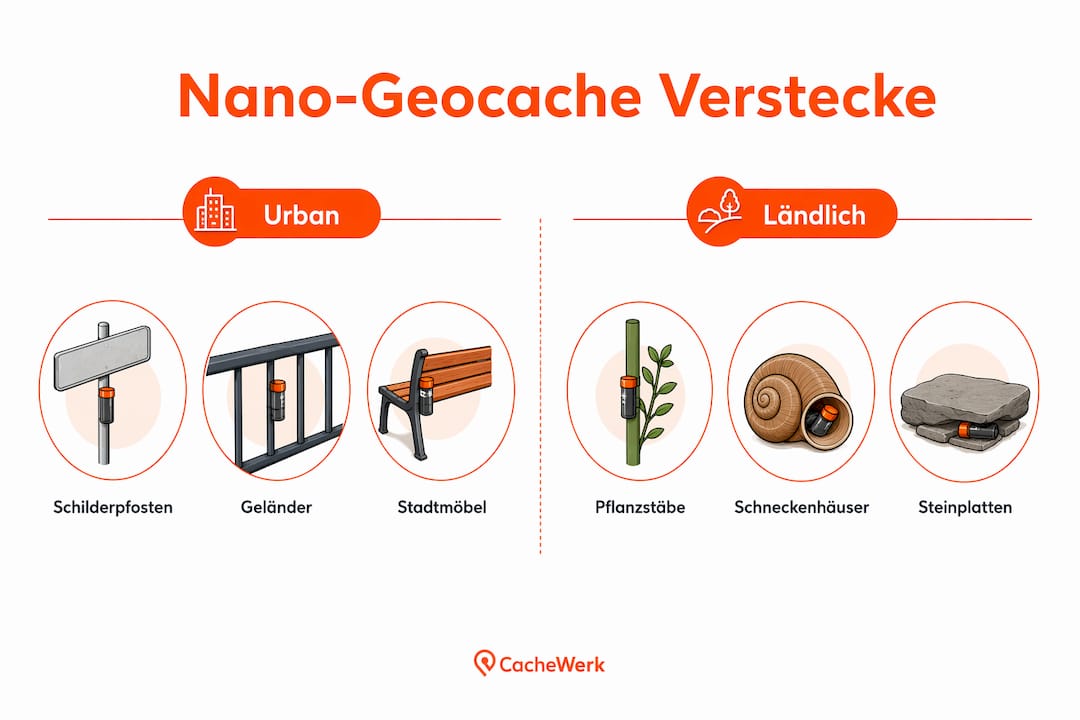
Urban or rural? In urban areas, cap nut caches and signpost holders are best. In rural areas, plant stake constructions and snail shells offer good camouflage.
Table of Contents
- What is a Nano Geocache?
- What are the dimensions of a nano, and how much fits in the logbook?
- What containers and materials are suitable for hiding nanos?
- Where can you creatively hide nanos?
- Step-by-step: How to place a nano correctly
- Maintenance, etiquette, and legal notes in Germany
- Which Cachewerk products suit which hide?
- Key Takeaways
- Hiding nanos: What really matters
- Your next nano comes from Cachewerk
What is a Nano Geocache?
A nano cache is the smallest common geocache container: cylindrical, usually magnetic, and barely larger than a fingertip. It contains only a tiny logbook, no trade items. Compared to a micro cache (e.g., a PETling or film canister), a nano is significantly more compact and can therefore be used in locations where even a micro would be too conspicuous.
The advantage is obvious: maximum camouflage in places that no other cache could access. The disadvantage is the fiddly logbook and the short lifespan if not properly sealed. For family caches or high-traffic areas, a nano is rarely the first choice because the logbook fills up quickly and finders with large fingers get frustrated.
Community Consensus: Nanos are not a last resort for poor hiding spots. They should make a special place accessible that would not work with a larger container.
According to community recommendations, those who have no experience as a finder should first look for at least 20 to 100 caches before placing their own. This significantly sharpens the sense for good hiding spots.

What are the dimensions of a nano, and how much fits in the logbook?
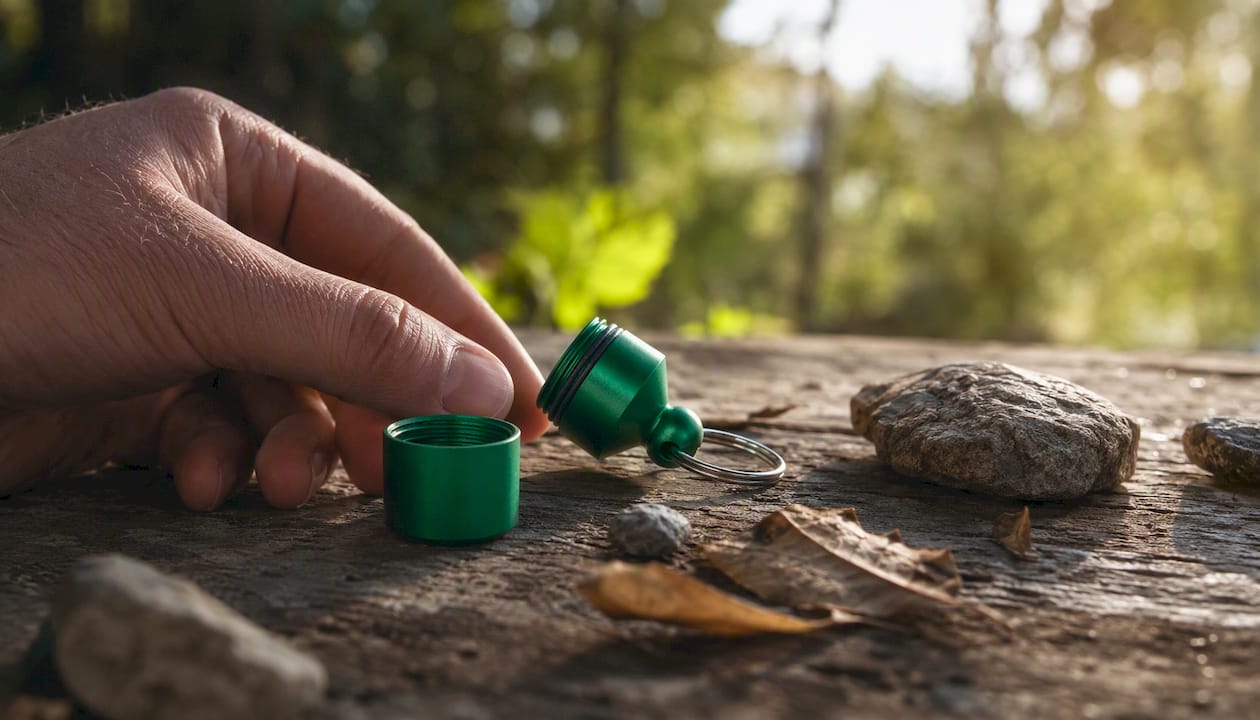
Typical nano containers measure about 10 mm in diameter and 15 mm in height. The logbook typically holds about 39 entries, after which it needs to be replaced.
| Feature | Nano | Micro (PETling) |
|---|---|---|
| Diameter | approx. 10 mm | — |
| Height | approx. 15 mm | — |
| Logbook capacity | approx. 39 entries | several hundred entries |
| Trade items possible | No | Yes (small) |
| Typical mounting | Magnet, hanger | Magnet, clamp, ground |
The logbook is inserted as a thin paper strip rolled up tightly. Important: Do not crease when rolling, otherwise the paper will tear with the first rain. For locations with many finds, a nano is hardly maintenance-friendly due to the quick logbook limit. A micro is worthwhile there.
What containers and materials are suitable for hiding nanos?
Three designs dominate in practice:
- Magnetic nano capsules made of stainless steel or aluminum adhere directly to metal surfaces. Stainless steel is more durable, aluminum lighter. With strong temperature fluctuations, the magnetic clamp can corrode, so a stainless steel suspension is recommended.
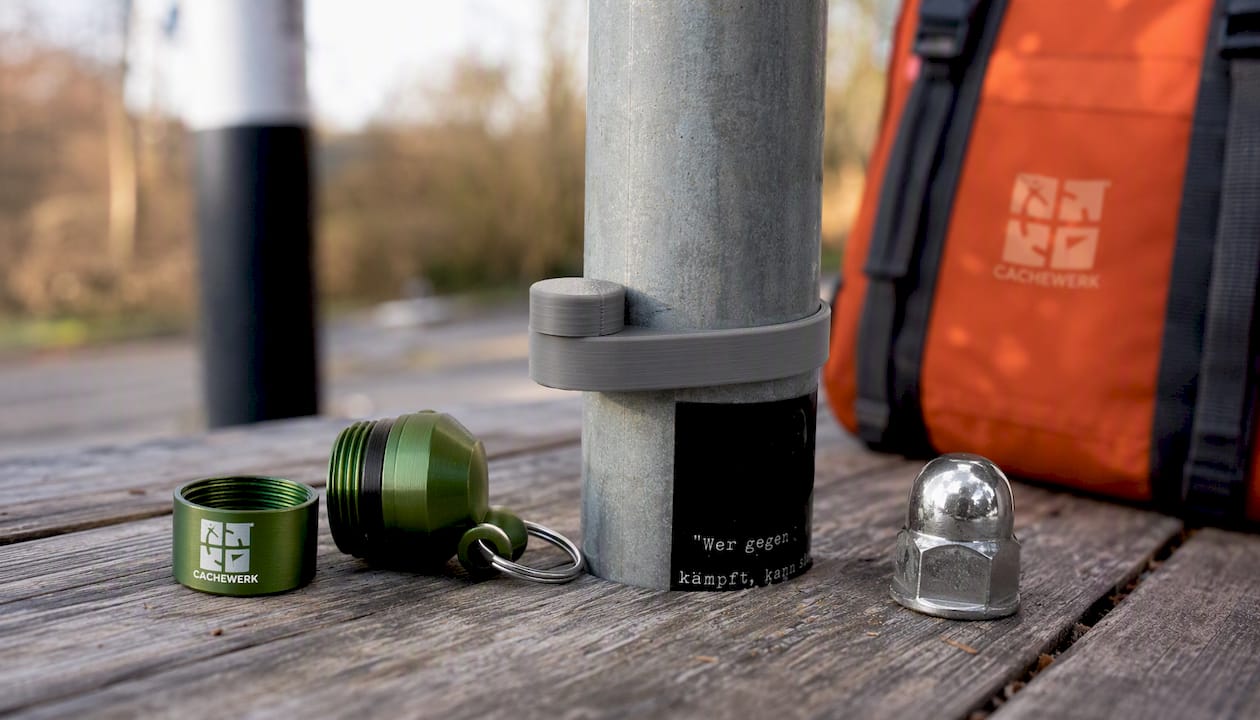
- Cap nut caches look like an ordinary hexagonal nut and are hardly noticeable on railings or metal structures. A magnet inside holds the container.
- 3D-printed PETG sleeves are custom-made for specific surfaces, e.g., for signposts with a 60 mm diameter. PETG is weather-resistant and dimensionally stable.
Water protection is crucial for nanos. An O-ring on the lid and a thin layer of silicone grease on the thread are sufficient for most locations. Before mounting, do a quick seal test: close the container, briefly immerse in water, check for bubbles.
Pro tip: Don't overdo the silicone grease. Too much grease attracts dirt and gums up the thread, making logbook changes difficult.
A cheap DIY option for rural areas: A solid iron rod (approx. 10 mm diameter) serves as a holder on which a magnetic nano sits. A removable hollow rod (approx. 16 mm outer diameter) completely conceals it. This plant stake construction is inexpensive, easy to maintain, and can be inconspicuously placed in flowerbeds or along path edges. More DIY building instructions can be found in the Cachewerk blog.
Where can you creatively hide nanos?
Urban: Signposts, railings, and street furniture
Signposts with a round cross-section are classic nano locations. A custom-fit 3D holder sits invisibly on the back. Railings, benches, and art installations in public spaces work just as well, as long as the container isn't glued at eye level. Cap nut caches on rows of screws are not noticeable even to attentive passers-by.
Typical problems in urban areas: Muggles (non-geocachers) observing the search, vandalism, and containers being accidentally removed. Therefore, the hide should be chosen so that the finder can retrieve it inconspicuously without arousing suspicion.
Rule of thumb for urban nanos: If you would be nervous yourself retrieving it, the location is wrong.
Rural: Plant stakes, snail shells, and stone slabs
In the countryside, there are more opportunities for natural camouflage. A nano in an empty snail shell as an outer casing looks deceptively real, as long as logbook handling is not forgotten. Under flat stone slabs by the roadside, a magnetic nano works well if a metal plate is attached underneath as an adhesive surface.
Warning list: These locations are taboo:
- Active bird nests and animal dwellings
- Nature reserves (without express permission)
- Private property without the owner's permission
- Hazardous locations such as embankments, railway tracks, or construction sites
For unusual professional hides, take a look at the Cachewerk Masterclass.
Step-by-step: How to place a nano correctly
Preparation, assembly, testing, and listing in that order.
- Assemble material list: Nano container, logbook strip, silicone grease, O-ring (spare), tweezers, mounting aid (magnet, screws, cable ties)
- Seal test: Fill container, close, briefly hold in water. No bubbles? Good.
- Visit location beforehand: Measure GPS coordinates with an accurate device, preferably multiple times and average at different times of day.
- Mounting: Stick magnetic nano directly or attach holder. Orient container so it can be retrieved without tools.
- Photo documentation: At least two photos of the hide from the finder's perspective. Do not show the hide directly, but document the area.
- Create listing: Specify size "Nano", clearly indicate nano type in the description text. This increases acceptance and prevents frustrated DNF logs.
Also for the listing:
- Note maintenance interval internally
- Hint about logbook limit in the cache description
- Estimate difficulty realistically (Nano ≠ automatically D5)
Maintenance, etiquette, and legal notes in Germany
Recommended maintenance intervals should be adjusted regularly depending on the location, for example, every few weeks in urban areas and regularly in rural areas. More frequently in case of high muggle traffic or extreme weather conditions.
For permits in Germany: Always obtain written permission for private land. Urban areas and parks require an inquiry with the local regulatory office or parks department, depending on the municipality. In nature reserves, hiding caches is generally not permitted unless the responsible authority has expressly agreed.
Groundspeak basic rule: No cache may be buried, disturb animal dwellings, or put finders in dangerous situations. These rules also apply in Germany and are checked during listing review.
Do's and don'ts at a glance:
- No damage to surfaces (no drilling without permission)
- No disturbance of fauna and flora
- Regular maintenance is a duty, not an option
- In case of problems (vandalism, loss), react quickly and temporarily deactivate the cache
If you are unsure whether a location is permitted, it is better to ask once too often. The community's basic rules are clear: respect for property and nature takes precedence over the desire for creative hiding.
Which Cachewerk products suit which hide?
| Product | Suitable for | Mounting | Waterproof | Maintenance effort | What fits in |
|---|---|---|---|---|---|
| Hanging Nano Army Green | Urban & rural, branches, railings | Hanging eyelet | Yes | Low | Nano logbook strip |
| Nano Signpost Ø 60 mm | Urban, traffic signs | 3D holder, clamps | Yes (PETG) | Very low | Nano logbook strip |
| Cap Nut Cache Stainless Steel | Urban, railings, rows of screws | Magnet | Yes | Low | Nano logbook strip |
Brief notes on use:
- Hanging Nano Army Green: The hanging eyelet fits on thin branches, fence wires, or railing bars. The army green camouflage color blends into green environments. Roll up the logbook before hanging and insert with tweezers.
- Nano hide for signposts: The 3D-printed holder clamps precisely onto posts with a 60 mm diameter. No tools needed. Choose the back of the post, with the inscription facing inwards.
- Cap Nut Cache: Simply hold it against a row of screws or a metal railing, the magnet holds reliably. Looks like a standard nut. Regularly check for corrosion on the magnet.
Further inspiration for creative nano caches is available directly from Cachewerk.
Key Takeaways
Nano caches succeed when the container type, camouflage, and maintenance plan are tailored to the location from the outset.
| Topic | Details |
|---|---|
| Sensible use of nano | Only place where a larger container would not work or would be too conspicuous. |
| Note logbook limit | Approximately 39 entries per logbook; plan maintenance interval accordingly. |
| Do not skip sealing | Check O-ring and silicone grease before each installation, perform water test. |
| Obtain permissions | Private property and nature reserves require written permission. |
| Use Cachewerk products | Hanging Nano, signpost holder, and cap nut cache cover the most common scenarios. |
Hiding nanos: What really matters
Many geocachers underestimate how much planning a good nano needs. The container is tiny, but the thoughts behind it should not be. A poorly maintained nano with a soaked logbook frustrates finders more than no cache at all. And a nano that was only placed because the location "might somehow work" misses the point.
What convinces me about Cachewerk products: They are tailored to specific scenarios. The signpost holder fits a standard post without needing to tinker. The cap nut cache looks like what it's called. This saves time during installation and during maintenance visits.
My advice: Start with a location you know well and pass regularly. Then maintenance is not an effort, but part of your routine.
Your next nano comes from Cachewerk
Cachewerk offers you custom-fit nano hides that you can install without tools and maintain effortlessly. Instead of hours of tinkering, with the signpost nano, you can have a neatly placed cache in minutes. The stainless steel cap nut cache lasts for years even in urban climates. And the hanging nano in army green works wherever a hanger is sufficient.
Check out the complete assortment and find the right hide for your next cache directly in the Cachewerk-Shop.
Useful Sources and Further Links
- Geocaching.at: Hiding a cache — Community basic rules, permission notes, and experience recommendations for new owners
- Geocaching-Magazin: Placing caches — Workshop tips for beginners, listing recommendations, and container selection
- DerSchnelleLinus: Nano Cache — Practical report with pro/con analysis and logbook capacity details
- DerSchnelleLinus: Plant Stake Nano — Detailed building instructions for an affordable rural nano construction
- Geoclub Forum: Nano Cache Containers — Community discussion with honest opinions on nanos
- Cachewerk Blog: Nano Caches Explained — Basics, tips, and product recommendations from Cachewerk
- Cachewerk: Innovative Products 2026 — Latest product innovations and hiding ideas
- TNT Escape: Scavenger Hunt Ideas — Inspiration for playful hiding concepts for events and families