
Understanding Cache Containers: Function, Benefits, and Practical Tips
You've hidden a cache, prepared everything carefully, and a few weeks later the first "Needs Maintenance" report comes in: the logbook is wet, the container is leaking. Many owners know this scenario all too well, even though they supposedly used watertight containers. The fault rarely lies with the hiding spot, but almost always with the container itself. This practical guide, from selection to maintenance, shows which types truly remain watertight, how creativity and functionality can be combined, and how you, as an owner, can sustainably provide for seekers.
Table of Contents
- The Purpose of Cache Containers in Geocaching
- The Most Important Cache Container Types and Their Characteristics
- Creative and Individual Solutions: From DIY Caches to Special Hides
- Care and Maintenance: How Cache Containers Remain Reliable and Fair for Everyone
- What Experts Often Conceal: The Invisible Balance Between Pragmatism and Creativity
- CacheWerk: Your Next Geocaching Innovation Awaits Here
- Frequently Asked Questions About Cache Containers
Key Takeaways
| Point | Details |
|---|---|
| Containers protect logbook | Only truly sealed and robust containers will keep weatherproof logbooks and fun safe in the long term. |
| Creativity brings diversity | Individually designed caches increase excitement and search enjoyment, but require wise selection and maintenance. |
| Good maintenance is mandatory | Regular inspection and care preserve the cache and log for future finders. |
| DIY is often financially worthwhile | Self-made solutions save money and can be convincing in terms of function and longevity. |
| Standards prove their worth | Classic containers like PETlings are simple, secure, and low-maintenance. |
The Purpose of Cache Containers in Geocaching
A cache container is not just any object hidden somewhere. It is the heart of every geocache. Without a reliable container, the whole experience quickly loses its value. A wet logbook, missing items, a broken lid: these problems frustrate seekers and damage the owner's reputation.
The container fulfills several functions simultaneously. Firstly, it reliably protects its contents – logbook, pen, and any trade items – from moisture, frost, and sunlight. Secondly, it is part of the searching experience itself. Finding a well-designed cache that surprises and delights will be remembered for a long time. So, the container is both protection and experience.
What many underestimate: not every container sold as "waterproof" actually is in outdoor use. Especially with temperature fluctuations, material expands and contracts. Lids that expand with heat can suddenly become loose in the cold. This effect is particularly critical with internal-thread containers: according to practical tests, they are significantly more prone to leaks than external-thread variants if the lid is not perfectly seated.
Note: A container that is watertight in the store may not be so in the forest after two winter months. External-thread containers like the PETling are considered a much more robust choice for long-term use.
What makes a truly good cache container? Here are the most important points at a glance:
- Reliable watertightness with fluctuating temperatures and heavy rain
- Durability due to suitable materials such as PETG, PP, or stable PVC
- Low maintenance so the owner doesn't have to check every few weeks
- Appropriate size for logbook, pen, and any trade items
- Camouflage or appearance that matches the hiding spot and the experience
- Easy handling for seekers, even in cold weather or with wet hands
A container intended as an "memory box" concept should preserve contents permanently and securely. This exact requirement also applies to geocaches. Function over aesthetics is the basic rule, even if aesthetics are certainly a plus.
Pro Tip: Test every new container before you hide it. Fill it with some paper, dip it briefly in water, and shake it. If the paper remains dry, the container is suitable for use.
The Most Important Cache Container Types and Their Characteristics
Now that it's clear why the right container makes such a difference, the practical question arises: what types are there, and which one suits which purpose? The market offers a variety of options. Not all are equally good.
The Direct Comparison
| Type | Watertightness | Durability | Cost (approx.) | Maintenance Effort | Suitable for |
|---|---|---|---|---|---|
| PETling | very good | high | 0.50 to 1.50 Euros | low | Micro, forest hide |
| Ammo Box | excellent | very high | 5 to 15 Euros | very low | Small to Regular |
| Film Canister | poor | low | 0 to 0.50 Euros | high | not recommended |
| Nano (3D-printed PETG) | good | high | 0.10 to 0.15 Euros DIY | low | urban micros |
| PP Screw-top Container | good | medium | 1 to 3 Euros | medium | Micro to Small |
| DIY Tube Hide | very good | very high | 1 to 3 Euros | low | forest, meadow |
The PETling is a classic in geocaching. It is inexpensive, easy to obtain, and its external thread closes reliably. External-thread containers like PETlings or ammo boxes are low-maintenance and are considered standard in the community. Exotic constructions based on complex mechanisms, however, are risky if poorly executed.
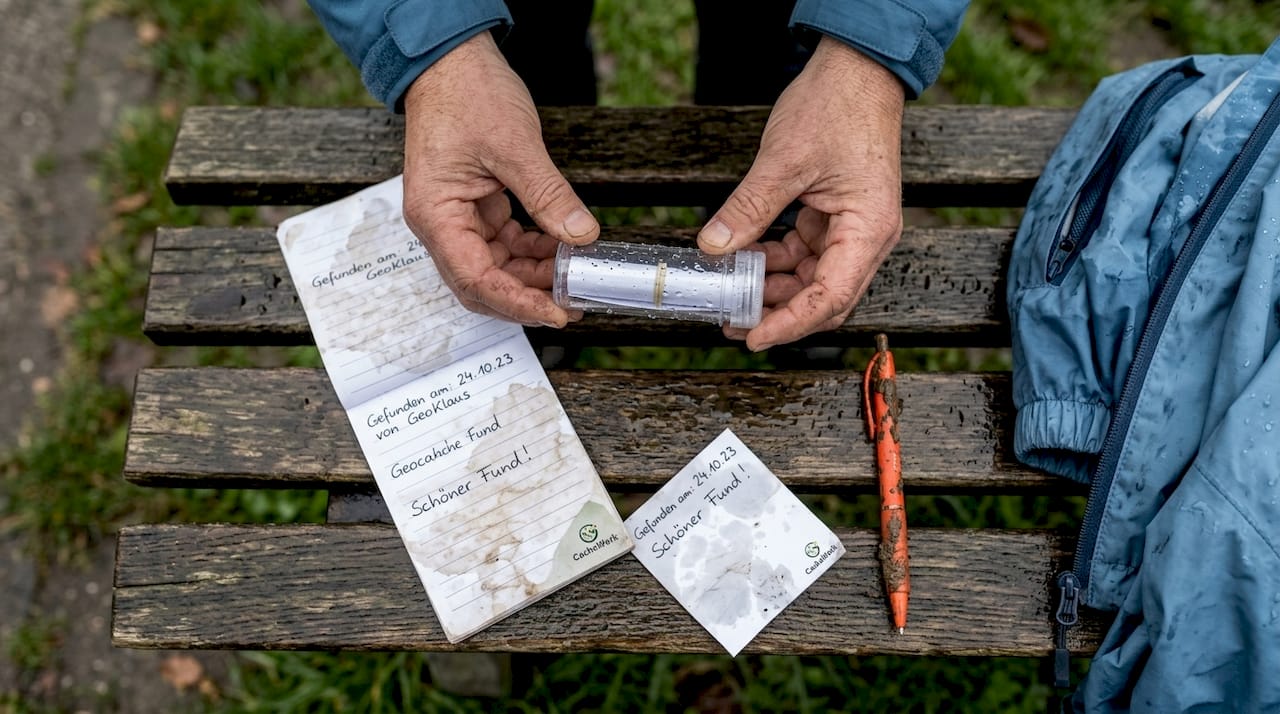
The film canister is a frequently cited example of a container to avoid. Although once widespread, it is, based on current knowledge, simply not waterproof enough for long-term outdoor use. A single rain shower can ruin the logbook.
3D-printed Nanos made of PETG are a modern alternative. According to current cost comparisons, a self-printed Nano costs only 0.10 to 0.15 Euros, while ready-made purchased versions cost 2 to 4 Euros. A small container from the printer costs 1.20 to 1.80 Euros instead of 5 to 12 Euros in stores. DIY thus saves considerably, but requires careful construction.
Here again are the advantages and disadvantages of the most commonly used types:
PETling:
- Advantages: inexpensive, proven, external thread, easy to camouflage
- Disadvantages: only suitable for micros and smaller contents, no space for trade items
Ammo Box:
- Advantages: almost indestructible, perfect watertightness, plenty of space
- Disadvantages: more expensive, heavier, conspicuous in urban areas
3D-printed Nano:
- Advantages: individually designable, very cheap to produce, durable with PETG
- Disadvantages: print quality is crucial, beginners easily make mistakes
Tube Hide (DIY):
- Advantages: durable, cost-effective, ideal for forest and meadow, robustly built without much effort
- Disadvantages: requires craftsmanship, visually less spectacular
A comparison of various container forms shows that standard containers with proven technology cause significantly fewer problems in long-term use than self-made creations without a solid basic concept. This does not mean that creativity is forbidden. But it needs a stable foundation.
Creative and Individual Solutions: From DIY Caches to Special Hides
Standard containers are good. But the special, the thing that finders talk about months later, often comes from individuality. A creative container surprises, intrigues, and delights. It transforms a simple find into an experience.
The following creative approaches have proven particularly effective in practice:
- Magnetic Nano on Metal Structures: A small container with a neodymium magnet adheres to railings, lamp posts, or metal boxes. Completely invisible to outsiders.
- 3D-printed Stone Imitations from PETG: Containers that resemble deceptively real stones, branches, or cones can be perfectly integrated into natural environments.
- Mechanical Puzzle Boxes: Wooden or metal boxes with simple sliding puzzles or locks, where the solution is part of the cache.
- Pipe Blinds with Camouflage Paint: PVC pipe sections that have been treated with bark, dirt, or paint look like forest debris.
- Waterproof Capsules in Stone Optics: Casting resin or concrete around a core container, so the cache literally looks like a stone.
The construction process of a creative container usually follows a clear sequence:
- Define Goal: What experience should the finder have? Amazement, puzzling, amusement?
- Analyze Environment: Urban hide or forest hide? What materials blend in?
- Choose Core Container: Watertightness first. No matter how cool the camouflage, it won't help if the content gets wet.
- Develop Camouflage Solution: Only then comes the appearance. Choose weather-resistant materials.
- On-site Test Run: Briefly place the finished cache at the planned location and examine it from different angles.
- Plan Logistics: Is the cache easily accessible for maintenance? Can the logbook be easily exchanged?
According to an experience report on DIY cache containers, tube caches, magnetic nanos, puzzle boxes, and 3D-printed constructions offer enormous variety. Stone imitations and mechanical puzzles, in particular, regularly generate enthusiastic log entries.
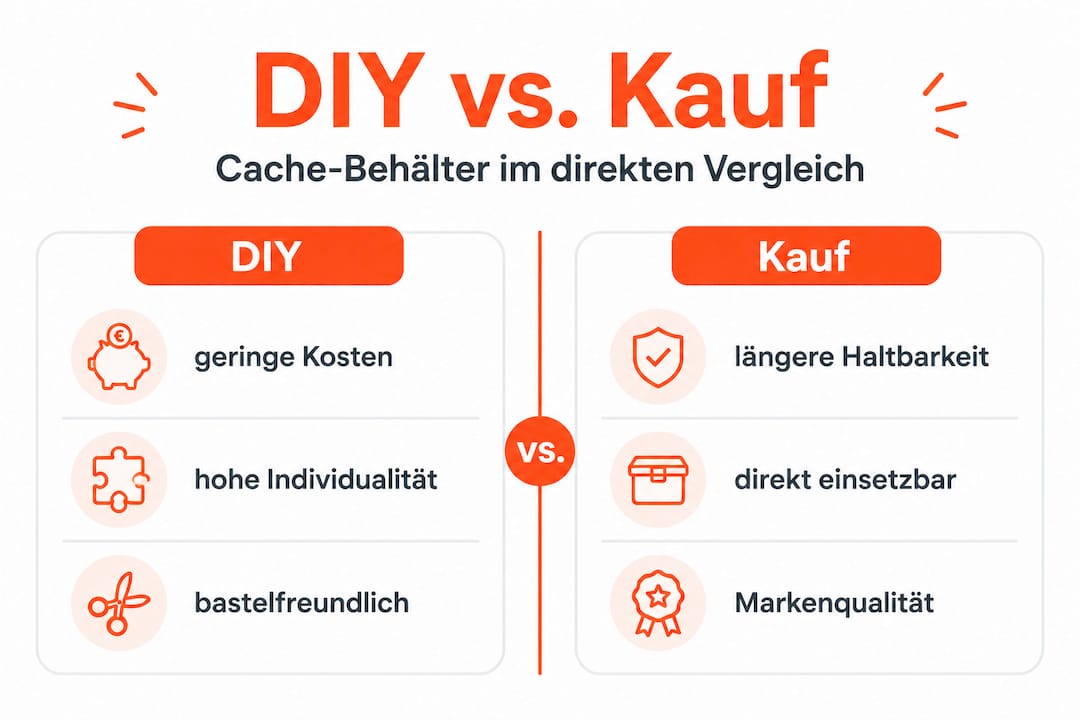
An important comparison: DIY vs. purchased.
| Criterion | DIY Container | Purchased Container |
|---|---|---|
| Cost | very low | medium to high |
| Originality | very high | often limited |
| Time commitment | high | low |
| Watertightness | variable, depending on execution | mostly tested |
| Maintainability | well-plannable | depends on the product |
Pro Tip: Always plan your DIY cache so that the logbook can be changed in under 60 seconds. This may sound trivial, but it makes a huge difference during the next maintenance. Complicated constructions that require tools to open are a real problem in everyday use.
More inspiration for creative crafting projects and durability can also be found in other owners' experience reports. And those specifically looking for DIY ideas for specific hiding situations will find numerous practical approaches there.
The true value of a special hide, by the way, isn't just in the "wow" factor upon discovery. It also lies in finders recommending such a cache multiple times, receiving higher ratings, and being sought out more often. A well-made creative cache is an investment in one's geocaching reputation.
Care and Maintenance: How Cache Containers Remain Reliable and Fair for Everyone
Creativity and stability are of little use if a cache is not regularly maintained. This is one of the most important duties of an owner. Anyone who publishes a cache takes responsibility, not just for hiding it, but for the entire lifespan of the cache.
Community Rule: According to geocaching etiquette, the owner is responsible for the condition of their cache. Log entries like "Needs Maintenance" are a direct call for help and should be addressed as quickly as possible.
A practical maintenance checklist for every cache owner:
- Check logbook: Is it full? Damp? Illegible? Replace the logbook immediately if necessary.
- Test watertightness: Close lid tightly, briefly check for internal moisture from the outside.
- Visually inspect container: Cracks, hairline cracks in the material, damaged threads or seals?
- Renew camouflage: Color faded? Camouflage objects shifted or damaged? Touch up.
- Check pen: Does it still write? An empty or frozen pen is a common problem in winter.
- Logbook in zip bag: Protects with containers where minimal moisture can penetrate despite good sealing.
Regular checks are crucial. At least twice a year, or better yet, after every storm or when "Needs Maintenance" entries accumulate, you should personally visit your cache. A well-maintained cache made of robust material will last longer, but it's not a self-runner.
What to do if the container is wet?
First: stay calm. Remove contents completely, dry them, wipe out the container, insert a new logbook, add a fresh pen, close the container, and re-check for watertightness. If the container itself is damaged, replace it immediately. A faulty container does not belong back in the field.
Pro Tip: Include a small emergency kit with each cache, i.e., a folded spare logbook and a spare pen in a zip bag. Then conscientious finders can help out in an emergency if you are not available. Communicate this in the cache description.
Maintaining other people's caches is tricky. Small helpful measures like drying a wet logbook are usually okay and appreciated by the community. Larger interventions, i.e., replacing containers, changing location, or modifying camouflage, should always be discussed with the owner first. The community rule is: inform before repairing.
What Experts Often Conceal: The Invisible Balance Between Pragmatism and Creativity
Now comes the part that is rarely openly discussed in forums and guides. Creative containers are great. But they can also fail, not because the idea was bad, but because functionality and creativity were played against each other.
In our experience, the same pattern emerges again and again: owners invest a lot of time in a spectacular appearance, but neglect watertightness or maintainability. Then, three months later, the first "Needs Maintenance" appears in the log, and the beautiful construction has to be completely dismantled because no one thought about how to change the logbook.
The truly best cache is often not the most spectacular. It's the one that still works perfectly three years after being placed, where the logbook is dry, the pen writes, and the camouflage holds up. That sounds unspectacular. But it's not. Because that's real craftsmanship.
A well-built DIY container made from proven materials beats any half-baked creative construction. This doesn't mean you shouldn't implement unusual ideas. On the contrary. But every creative idea must be measured against a fundamental question: Will this still work reliably after two winters?
There's also a subtle fairness question. If you hide a cache that's difficult to open or maintain, you're placing the burden on future finders and sometimes on other members of the community who step in during an emergency. Creativity without responsibility is not a virtue in geocaching.
The community benefits from owners who master both. Pragmatism as a basis and creativity as the icing on the cake. Those who achieve this build caches that are loved. Not because they look perfect, but because they work and surprise at the same time. This balance is the actual goal and also the greatest challenge in cache design.
CacheWerk: Your next geocaching innovation awaits here
You now know what really matters when it comes to cache containers. A solid base, smart material choice, regular maintenance, and, if you wish, a good dose of creativity on top.
If you're ready to take your next hide to the next level, then check out the selection at CacheWerk. There you'll find high-quality geocaching equipment and accessories for every purpose, as well as a curated collection of special hides for those who are looking for that certain something extra. From 3D-printed PETG containers to well-thought-out camouflage solutions for urban and rural locations. Here you'll find what truly works and is guaranteed to make an impression.
Frequently asked questions about cache containers
What makes a truly waterproof cache container?
A container with a tightly closing external thread, like the PETling, offers the most reliable protection against moisture, while classic film canisters, according to practical tests, are usually not permanently sealed.
How often should you check your own cache container?
You should check your cache at least twice a year, as well as after storms or if there are "Needs Maintenance" indications, and replace the logbook or container if necessary.
Are self-made DIY containers suitable for beginners?
DIY containers are often durable and inexpensive. A self-printed tube holds up without problems for over 13 months in practical tests, but requires careful material selection and proper sealing from the start.
What to do if a stranger's cache container is defective?
Log a "Needs Maintenance" and contact the owner before you intervene yourself. Only carry out major repairs or modifications to the container after consultation.