Cache Design Guide: 5 Creative Cache Design Ideas

You know the drill: you follow the GPS coordinates, find yourself standing in front of a grey, mini magnetic container under a guardrail, and don't think twice about it. Found it, move on. That’s not bad geocaching, but it isn't particularly good either. The truly unforgettable caches are the ones where you look twice, chuckle, or feel genuine excitement. With the right design, you can create that very experience for others. In this guide, we will show you step-by-step how to build creative, durable, and fair cache hides, whether in the city or deep in the wild.
Table of Contents
- Foundations for successful cache design
- Cache design in urban environments: challenges and solutions
- Effective cache design in the field: natural-looking hides and ecological responsibility
- Innovative DIY ideas: technology, 3D printing & gadget caches for advanced users
- Maintenance, checks, and long-term enjoyment of your cache
- Our experience: what really counts in cache design
- Your next geocaching adventure: the perfect cache with CacheWerk
- Frequently asked questions about cache design
Key Takeaways
| Point | Details |
|---|---|
| Creativity is key | Original, clever hides provide more joy and challenge in geocaching. |
| Plan based on location | Choosing the right camouflage and materials depends on the urban or natural environment. |
| Durability & maintenance | Regular check-ups extend the lifespan and ensure a smooth experience for all geocachers. |
| Use technology wisely | Modern 3D prints and gadget caches bring innovation and new gameplay mechanics to geocaching. |
Foundations for successful cache design
A good cache design meets three basic requirements: it is challenging, accessible, and safe. That sounds simple, but many cache owners underestimate this triad. A hide that no one finds because the coordinates are 20 meters off frustrates the community. A cache that is only accessible with climbing gear excludes many geocachers.
Before you start, you should ask yourself the following questions:
- Where should the cache be located? City, forest trail, park, or remote terrain?
- What difficulty level is intended? Set the D/T rating honestly.
- How maintenance-intensive should the cache be? The more complex it is, the more care it requires.
- Which materials can withstand the local weather? Rain, frost, and heat each pose different challenges.
A typical mistake is packing too much into one hide. A cache that tries to be a puzzle, gadget, and nano container all at once quickly becomes confusing. Less is often more. Focus on one strong idea and implement it consistently.
Requirements vary significantly depending on the environment. Ideas for urban hides show just how diverse the possibilities are in the city. In the field, however, natural materials and discretion are what count.
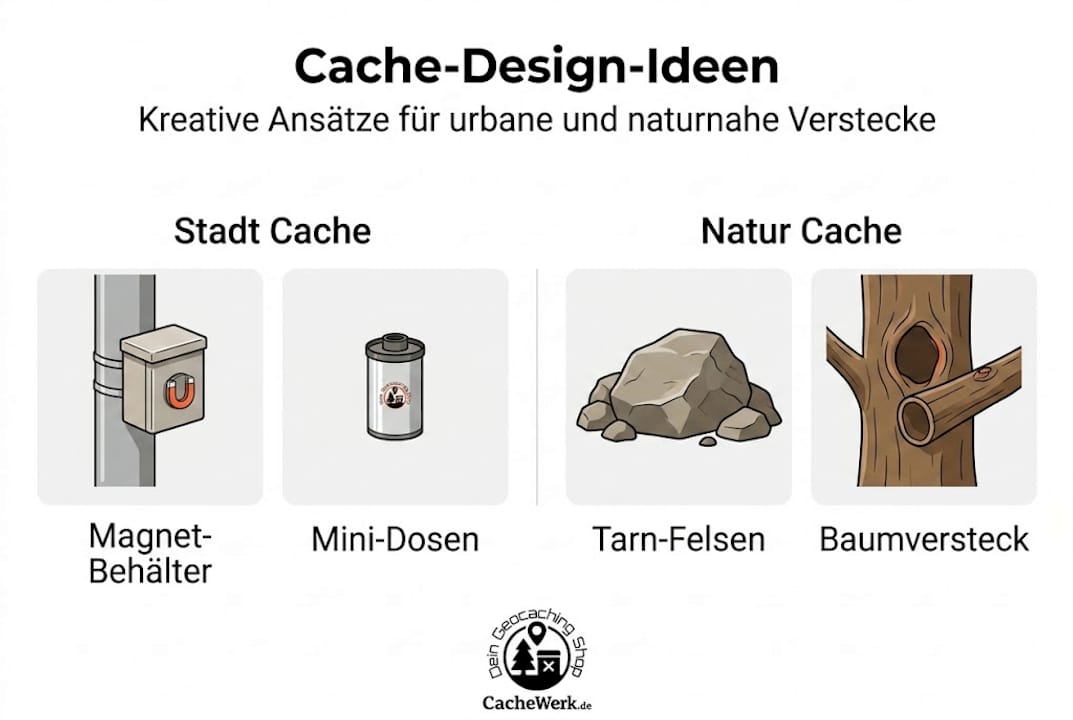
| Cache type | Material | Special feature | Maintenance | Environment\ |
|---|---|---|---|---|
| Nano cache | Metal, magnet | Very small, barely visible | Low | Urban\ |
| PETG container | 3D print (PETG) | Robust, customizable shape | Medium | Both\ |
| Fake rock | Resin | Deceptively realistic | Low | Field\ |
| Ammo box | Metal | Weatherproof, large logbook | Low | Field\ |
| Gadget cache | Electronics, plastic | Puzzle character, high-tech | High | Both |
Magnetic containers and nano hides on metal surfaces are especially popular in urban environments, while fake rocks and PVC pipes are the preferred choice in the field.

Pro tip: Test your cache before publishing with a friend who hasn't seen it yet. This will help you determine if the coordinates, hints, and difficulty are truly appropriate.
Cache design in urban environments: challenges and solutions
Cities offer fascinating opportunities for creative hides, but also unique challenges. Muggles (non-geocachers) are everywhere. This means: camouflage is everything. A cache that stands out will either be stolen, reported, or destroyed.
The most popular solutions for urban environments:
- Magnetic nano containers on signs, benches, or metal railings
- Fake screws or bolts on walls and fences
- Camouflage containers looking like everyday objects such as cigarette butts, chewing gum, or bolts
- Sticker caches with hidden log strips
A comparison of the most common urban cache types:
| Cache type | Size | Camouflage | Muggle safety | Recommended location\ |
|---|---|---|---|---|
| Nano cache | Very small | Very high | Very high | Metal posts, railings\ |
| Magnet cache | Small | High | High | Signs, benches\ |
| Fake object | Variable | Very high | Very high | Walls, sidewalks\ |
| Micro container | Small | Medium | Medium | Bushes, corners |
“High muggle areas require puzzle elements or plain-sight hides” is a fundamental principle shared by many experienced geocachers. A cache located in a busy square must either be completely invisible or designed as a puzzle cache where the actual hide is only revealed after solving a puzzle.
Low-maintenance containers are especially important in the city, as you can't visit them every week. Creative urban hides made of magnetic material and weatherproof plastic have proven particularly durable. Geocaching stickers for city caches can also enhance the appearance and make the cache more personal.
Always check the legal situation regarding urban caches. Private property, landmarked buildings, and public security installations are off-limits.
Effective cache design in the field: natural-looking hides and ecological responsibility
Different rules apply in the field. Here, it's not about fooling muggles, but blending seamlessly into nature. Fake rocks, PVC pipes in tree hollows, and ammo boxes disguised with natural materials are proven solutions that do not disturb the ecosystem.
A natural hide step-by-step:
- Choose a location: Look for a spot with natural anchor points like rocks, tree roots, or distinctive trees.
- Adapt the container: Use colors and materials that match the environment, like green, brown, or grey.
- Build the camouflage: Lay twigs, leaves, or moss around the container without burying it.
- Check stability: The cache must remain in place even after heavy rain or wind.
- Measure coordinates precisely: In the field, trees can affect the GPS signal. Measure multiple times.
Checklist for environmental protection when hiding:
- Never dig or remove vegetation.
- Do not use chemical materials that could harm the soil or animals.
- Avoid animal nests and breeding grounds by a wide margin.
- Do not place caches near endangered plants or in protected areas without permission.
- Check containers for hazardous materials (no phthalate-based PVC, no rust-prone metal).
Pro tip: For changing weather, we recommend PETG containers or weatherproof resin fakes. These materials don't fade easily, don't become brittle, and retain their color even after several winters.
Innovative DIY ideas: technology, 3D printing & gadget caches for advanced users
If you want more than just a box in a bush, you should look into 3D-printed PETG containers and mechanical gadget caches. PETG is a plastic that is particularly robust, food-safe, and weatherproof—ideal for outdoor caches intended to function for years.
How to plan and build your own PETG cache housing:
- Define the design: What shape should the cache be? Cylinder, box, fake object?
- Create a 3D model: Free programs like Tinkercad or Fusion 360 are great for beginners.
- Consider wall thickness: At least 2.5 mm for outdoor durability.
- Plan for airtight sealing: Integrate O-ring grooves or screw caps into the design.
- Print and test: After printing, check for water-tightness by briefly submerging the container in water.
- Camouflage: Customize using paint, natural materials, or camouflage foil.
Ideas for mechanical puzzle and gadget caches:
- Sliding puzzles made of 3D-printed parts that reveal a numerical combination
- Magnetic locks that can only be opened with the appropriate magnet
- Electronic puzzle stations with Arduino microcontrollers and LED feedback
- Cable or lever mechanisms for spectacular opening movements
Pro tip: With outdoor electronic caches, condensation is the biggest problem. Always use a silica gel packet inside the housing and check seals regularly. Cache technologies and innovations offer further technical inspiration for advanced tinkerers.
Maintenance, checks, and long-term enjoyment of your cache
A cache is not a "set and forget" project. After placing it, your real responsibility begins. Especially with tech caches: batteries should be checked every three months and replaced if necessary. Ignoring this risks a cache that simply stops working and collects negative logs.
Maintenance routine for your cache:
- Read logs regularly: Finders often provide hints about problems before they become critical.
- Perform on-site checks every three months for tech caches: batteries, seals, mechanics.
- Check after extreme weather: Storms, frost, or heavy rain can shift even robust hides.
- Replace the logbook if it is full or has become damp.
- Verify coordinates if you have repositioned the cache after a repair.
Community feedback is worth its weight in gold. Geocachers who especially like a cache often leave detailed logs with photos and praise. This feedback shows you what works. You should take critical logs seriously and react promptly.
Smart caches and puzzle caches present an additional challenge: you must ensure the puzzle remains solvable. If external websites or apps are integrated, check regularly to see if the links still work. A broken puzzle link is just as frustrating as a dead battery.
Statistic highlight: Tech caches where maintenance is neglected receive significantly more negative logs on average than classic containers with simple mechanics. Regular care is therefore not just nice to have, but crucial for your cache's reputation in the community.
Our experience: what really counts in cache design
After many years with geocaching products and direct contact with the community, we can say one thing with certainty: the caches people still talk about years later are not the most technically complex ones. They are the ones that implement a clear idea consistently while remaining easy to maintain.
Many cache owners put enormous energy into creation but forget the follow-up care. A brilliant gadget cache design is useless if the cache drops out of the system after six months due to dead batteries or rotted seals. Experience with tech caches repeatedly shows: durability beats complexity.
Original ideas are deeply appreciated by the geocaching community. A simple fake rock that looks deceptively real is just as exciting as a complex electronic puzzle if it is well-implemented. Our advice: choose an idea that you will still enjoy maintaining in two years. Then your cache will become a true highlight on the map.
Your next geocaching adventure: the perfect cache with CacheWerk
You now have the most important foundations, ideas, and techniques for creative cache design. Now all that's missing is the right equipment. At CacheWerk, you will find exactly what you need.
Whether you are planning a robust city cache or a natural forest hide, you will find high-quality solutions for every application in our equipment and accessories for geocachers section. Our tree fungus cache hide for outdoor use is particularly popular, combining deceptively real camouflage with robust functionality. From smart camouflage hides to 3D-printed specialty housings, we have the right thing for your next project. Take a look and bring your cache idea to life!
Frequently asked questions about cache design
Which materials are best suited for a durable geocache?
Robust plastics like PETG, weatherproof PVC pipes, and concealable containers ensure sustainable quality and protection in any weather. 3D-printed PETG containers are considered a particularly durable choice for outdoor use.
How often should a technology-based cache be maintained?
Gadget caches should be checked at least every three months for batteries and functionality to prevent negative logs.
which types of caches are particularly suitable for high-traffic city locations?
Magnetic nano containers or camouflaged containers that are inconspicuously attached to metal surfaces are ideal for busy locations with many muggles.
how can I avoid ecological damage when hiding caches in the terrain?
Place caches only in locations that are close to nature, avoid digging, and use materials without harmful residues. Fake stones and natural materials blend into the environment without disturbing the ecosystem.
what makes a hide particularly creative?
A mix of camouflage, technology, and a clever puzzle character delights the community. Mechanical gadget caches with surprising opening mechanisms remain in memory for a particularly long time.