Magnetcache ideas for owners: These hides really hold

The most reliable magnetic cache ideas are PETlings with a magnetic mount, screw nanos, stainless steel acorn nut nanos, and the classic magnetic container. It is best to place the magnet inside the housing rather than gluing it to the outside, and neodymium remains the material of choice for holding power. You can read about how to properly build, camouflage, and protect these ideas from rust in the following sections.
In short:
- Only neodymium magnets placed inside the housing offer the best holding power and protection against corrosion.
- For micro and nano caches, flat disc magnets measuring Ø8×2 millimeters with about 1.1 kilograms of holding power are suitable.
- Camouflage and protection against rust extend the lifespan, as magnetic hiding spots are secured with weather-resistant glue, heat-shrink tubing, and appropriate camouflage paint.
- Ready-made hiding solutions such as the PETling with a magnetic mount or the stainless steel acorn nut cache are robust, waterproof, and ideal for various environmental conditions.
- Placing a magnetic cache in the forest requires the consent of the landowner, an inconspicuous design, and the provision of contact details; otherwise, there is a risk of removal.
Table of Contents
- Magnetic cache ideas with assembly instructions and camouflage tips
- Which magnets and materials are best?
- Assembly, camouflage, and maintenance for long-lasting hiding spots
- Nature conservation, liability, and rules for placement
- Practical tip from the CacheWerk team
- Ready-made magnetic cache solutions from the CacheWerk range
- Sources
- FAQ
Magnetic cache ideas with assembly instructions and camouflage tips
Magnetic hiding spots seem simple, but the details determine their lifespan and findability. Four construction methods have become standard among geocache owners.
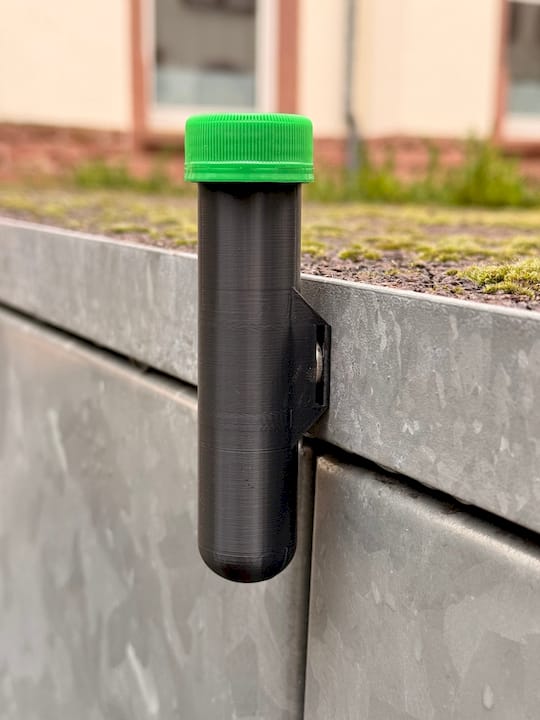
1. PETling with a magnetic mount A PETling offers enough space inside for a magnet without having to alter the shape of the container. Community experience recommends neodymium discs, about 10 × 5 millimeters in size, glued with a weather-resistant glue like Pattex Repair Extreme instead of hot glue. Two magnets instead of one noticeably increase security against falling. Camouflage colors in rust brown or gray help the PETling disappear on pipes, fences, or junction boxes.
2. Screw hiding spot with a secret compartment Here, the magnet is inserted into a prepared screw housing, usually hidden in the head or shaft. The trick lies in the balance: The secret compartment must be large enough for a log strip, but the screw must not look any different from any other one on fence posts, benches, or metal beams. Such a hiding spot is particularly effective where inconspicuous metal surfaces are already present.
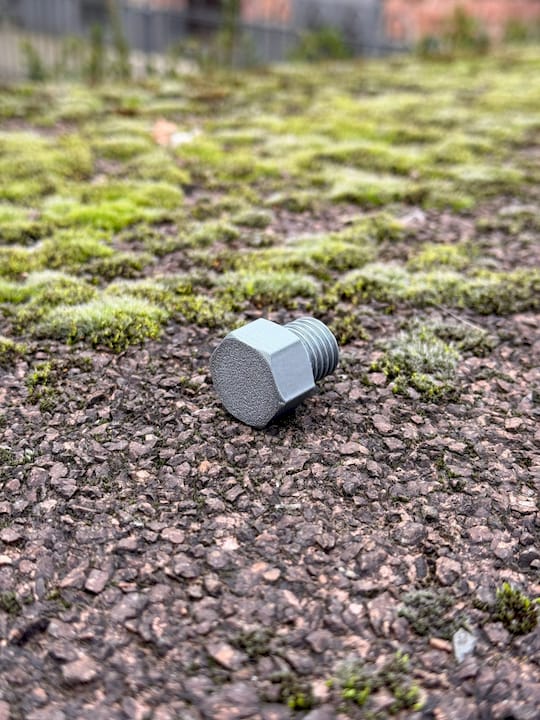
3. Stainless steel acorn nut nano In urban environments, acorn nuts are hard to distinguish from real fasteners. Stainless steel has two advantages: it does not rust noticeably and looks completely plausible on lampposts or railings. Waterproofing is mandatory for this design, as nano caches outdoors leave little room for moisture in the logbook.
4. Magnetic film canister The classic film canister remains popular because it is lightweight, robust, and inexpensive. Typical mistakes include:
- Choosing a magnet that is too weak for wind and vibration on the mounting surface
- Gluing the film canister without additional securing instead of clamping it as well
- Placing it in high-traffic areas without any camouflage
Guardrails, metal railings, and the undersides of benches work well as long as the color of the canister is matched to the surface.
For owners hesitating between these four variants: PETlings and film canisters are suitable for quick setups, while screw and acorn nut nanos are better for locations where every detail must be perfect.
Which magnets and materials are best?
Neodymium magnets are the standard for geocachers because they provide high holding power in a very compact design. In practice, rough guidelines are sufficient:
- Micro and nano containers: approximately 0.5 to 3 kilograms of holding power
- Small containers: approximately 3 to 8 kilograms of holding power
- Flat disc magnets with holes are particularly suitable for micro containers because they can be easily screwed or glued in
As a concrete guide, MagnetMax mentions discs measuring Ø8×2 millimeters with about 1.1 kilograms of holding power for mini-caches, which is perfectly sufficient for most nano applications.
The weak point of almost every magnetic cache is corrosion. Magnet providers advise placing the magnet inside the housing rather than leaving it exposed on the outside. Nickel-plated coatings, heat-shrink tubing over the magnetic surface, and a thin epoxy seal as a final layer offer additional protection.
Pro tip: Combine glue and mechanical securing. A drop of superglue alone rarely lasts permanently. A strip of duct tape over the glued magnet absorbs vibrations that would otherwise lead to it coming loose after months.
Assembly, camouflage, and maintenance for long-lasting hiding spots
Clean assembly always follows the same sequence:
- Degrease and dry the surface and the magnet area
- Fix the magnet inside the housing using weather-resistant glue
- Additionally secure it with duct tape or heat-shrink tubing
- Apply camouflage only after that
Small investments pay off when it comes to camouflage: tape with a rust or concrete look, 3D-printed covers in special shapes, or suitable paint make a standard container into a hiding spot that no one discovers by accident. It is important not to build climbing-related hiding spots and to always leave a way for the owner to be contacted on or in the cache.
A fixed inspection cycle noticeably extends the lifespan. Every few months, it is worth checking three things: the tightness of the container, signs of rust on the magnet, and the condition of the logbook. Community reports show that the combination of glue and additional bandaging significantly increases long-term stability, and this exact combination is the least problematic during maintenance checks. If you find a loose logbook or a wobbly magnet, it is better to replace it immediately than to risk a nasty surprise upon the next find.
Nature conservation, liability, and rules for placement
A magnetic cache in the forest or on natural surfaces comes with obligations that are quickly overlooked. Before placing, ensure the following:
- Obtain permission from the landowner, especially for forest and private areas
- Do not cause damage to young plants, bark, or sensitive locations
- The cache must not represent any unexpected additional danger, for example, through sharp edges or unstable mounting
- Storing the owner's contact details on or in the cache is mandatory
Forestry guidelines explicitly urge caution: An information sheet from Saxony states specifically that caches must not cause damage and must be labeled with contact details; otherwise, the forest owner can have the hiding spot removed. In protected areas, the following also applies: do not leave paths, do not create hiding spots in nesting or breeding habitats, and in case of doubt, choose an alternative location.
Practical tip from the CacheWerk team
For urban locations, I almost always reach for acorn nut or screw nanos because they simply don't stand out on metal surfaces. In the forest or near water, the PETling proves better because it handles moisture more robustly than small metal hiding spots. The magnetic construction workflow on the CacheWerk blog shows some of these techniques in detail, especially when working with heat-shrink tubing. With PETG-printed covers, hiding spots can be individually designed as they are lighter than metal and can be available in various camouflage colors.
— Benedikt
Ready-made magnetic cache solutions from the CacheWerk range
If you don't want to assemble every hiding spot yourself, you can find ready-made solutions that cover various proven construction methods.
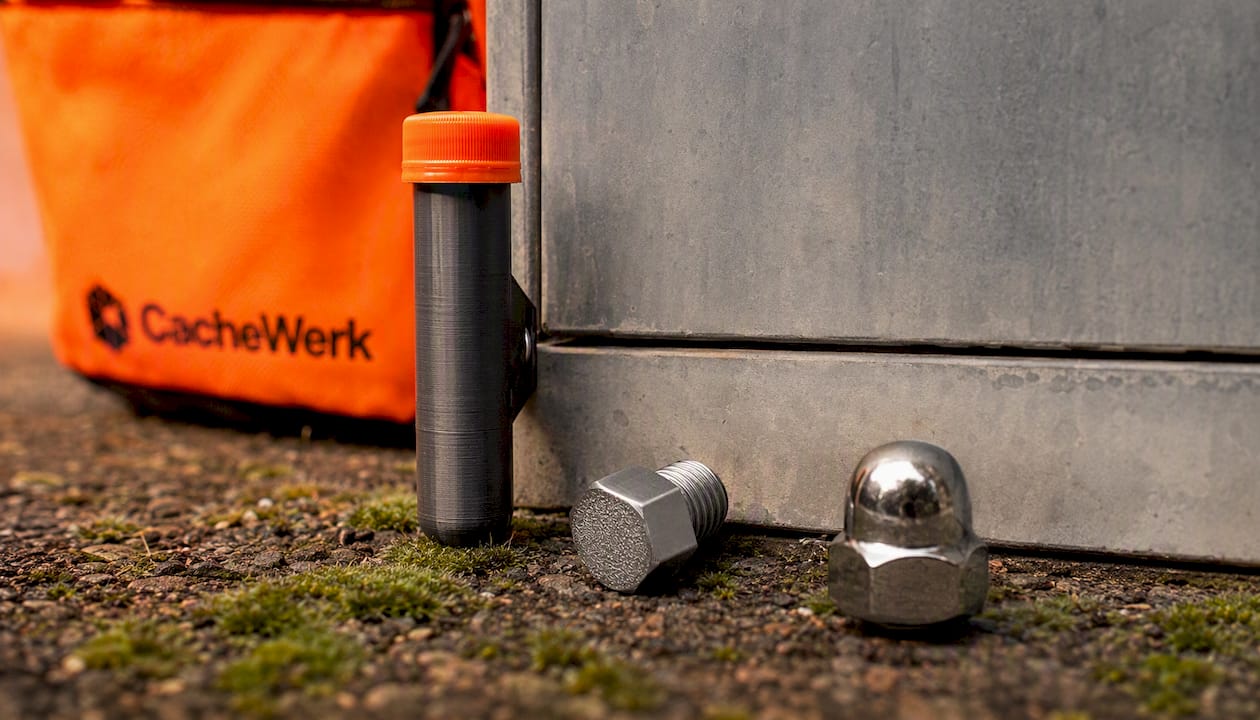
The geocaching PETling with a magnetic mount comes in camouflage and signal colors, saving you the effort of gluing the magnet by hand. For urban metal surfaces, the double pack of screws with a secret compartment and magnet is suitable, ideal for nano caches on fences or posts. If you are looking for maximum weather resistance, choose the stainless steel acorn nut cache, which is waterproof and rust-resistant for continuous outdoor use. If you prefer printing your own, you can find suitable 3D files for your own hiding spots in the shop. Check out the range and choose the solution that fits your next hiding spot.
Sources
More on magnet types can be found in the article on geocaching magnetic containers, and technical details on assembly are in the article on coating and weather protection.
- Supermagnete
- MagnetMax — Which magnets do I use for geocaching?
- Sbs
- Building a magnetic PETling — DerSchnelleLinus Blog
FAQ
Which magnet is suitable for a nano cache?
Flat disc magnets made of neodymium are the most common choice for micro and nano containers. Examples like a disc measuring Ø8×2 millimeters provide enough holding power for most hiding spots of this size with about 1.1 kilograms of pull.
Should the magnet be hidden inside the cache or attached to the outside?
The magnet should be inside the housing, not exposed on the outside. Magnet providers explicitly warn against corrosion for externally mounted magnets and recommend additional protective coatings or heat-shrink tubing.
How do I protect a magnetic cache from theft and vandalism?
Good camouflage beats every other security measure: inconspicuous coloring, plausible shapes like screws or acorn nuts, and placement away from highly frequented areas. Ready-made options like the stainless steel acorn nut cache are intentionally designed to be barely recognizable as a hiding spot on metal surfaces.
Can I simply place a magnetic cache in the forest?
No, this is not possible without the permission of the landowner. Forestry guidelines additionally require that the cache does not cause damage to plants and is provided with the owner's contact details; otherwise, the forest owner can have the hiding spot removed.
What do ready-made magnetic cache solutions cost at CacheWerk?
You can find the current prices for products like the PETling with magnetic mount or the acorn nut cache directly in the CacheWerk shop, as they vary depending on the version.